
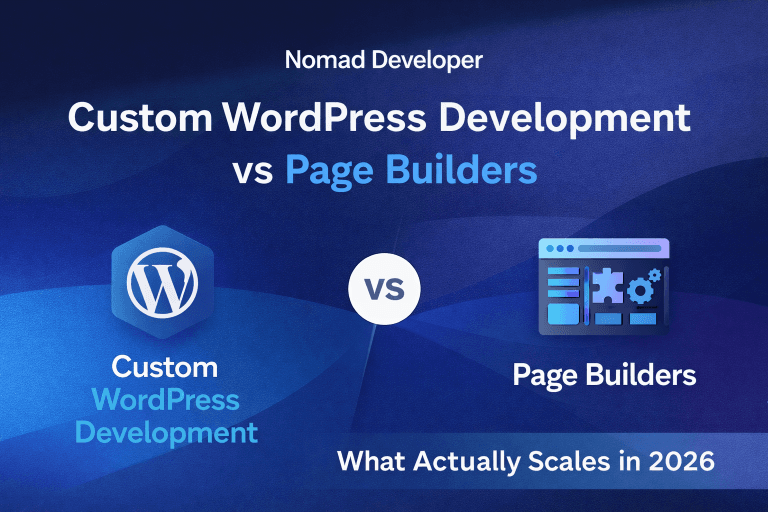
Custom WordPress Development vs Page Builders: What Actually Scales in 2026
This decision usually comes down to the balance between custom WordPress development, technical SEO foundations and the kind of ongoing support your site will need as it grows.
What page builders do well
Page builders help you ship quickly. They are great for early-stage validation, small brochure sites and simple campaign pages where speed matters more than long-term maintainability.
- Fast page production
- Non-technical editing
- Quick layout iteration
Where page builders start failing
The problems appear when you want consistent design at scale and predictable performance. Many builders output heavy markup and load global styles and scripts that every page pays for.
Many of these issues can be reduced with proper technical SEO and performance-focused implementation, but architecture still matters.
- Excessive nested markup and inline styling
- Render-blocking assets and unused code
- Harder debugging and slower build evolution
What custom development changes
A custom WordPress development approach using native blocks or a modular component system gives you full control over what loads and when.
- Lean markup and predictable templates
- Conditional asset loading
- Better internal linking patterns and scalability
This is usually where custom architecture starts compounding. Cleaner templates, stronger content structure and better control over front-end output make future changes easier and support both performance and search visibility.
A simple decision framework
Use a builder if the site is short-lived or purely marketing and you need speed. Invest in custom development if you want the site to become an asset that compounds with content, links and product growth.
- If the site will run under 6 months, a builder is usually fine.
- If you need strong performance and SEO, custom is safer.
- If editors need guardrails, modular components win.
If you already built with a builder
You do not have to rebuild everything. Start by fixing the biggest bottlenecks, then progressively replace the heaviest templates with modular sections.
If the site has grown beyond its limits, a structured WordPress rebuild or migration may be the cleaner long-term solution.
- Remove unused widgets and templates
- Optimise images and fonts
- Introduce a component library for new pages first
For many businesses, the best route is not a full restart but a phased improvement plan supported by ongoing WordPress support. That lets you keep what still works while reducing the technical debt that slows the site down.
FAQs
Does a page builder hurt SEO?
Not automatically. It becomes a risk when it causes slow pages, heavy markup and inconsistent internal linking. SEO is the outcome of performance, structure and content quality, which is why technical SEO implementation matters more than the builder itself.
What is the best long-term setup?
A modular approach with controlled components, clean templates and strict performance rules. The goal is predictable output and stable editing.
Can you mix custom and builder pages?
Yes. Many sites keep builder landing pages while core pages and templates are custom. Just keep a consistent design system and avoid loading heavy assets everywhere.
Need help deciding?
If you are working through the decision yourself, AI tools can be useful for pressure-testing your thinking. I wrote about using Claude as a developer tool and how it fits into architectural planning and spec work.
If you want a quick technical review, send me your site and your growth plan. I will tell you what to keep, what to refactor and what to rebuild.
The most relevant starting points are usually custom WordPress development, WordPress migration and ongoing support.
Keep exploring
Recent work
All case studies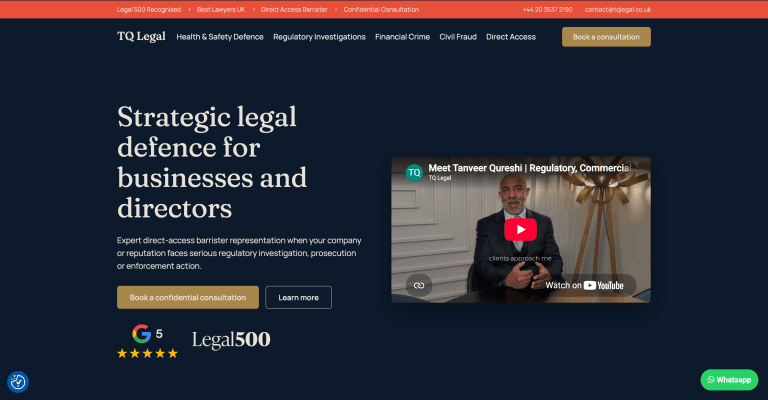
TQ Legal: Rebranding a Live Barrister’s Website Without Breaking It
A complete rebrand of a live barrister’s WordPress site, shipped as an additive component layer alongside the legacy theme so nothing already live ever broke. A token-driven design system, a fully editable ACF page builder and a measurable enquiry journey, all with a zero-downtime rollout.

Roger
An ongoing WordPress optimisation project for Roger, focused on improving mobile UX, navigation clarity and content structure through continuous frontend refinement.
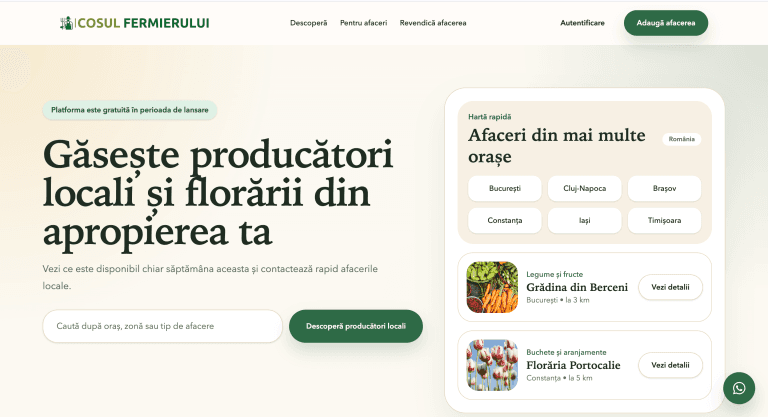
Farmer’s Basket
Coșul Fermierului is a Romanian marketplace platform helping local producers and florists manage listings, generate inquiries and grow visibility through a trust-first discovery experience.
Services
All servicesReading
All articles20 mistakes clients make using WordPress
Many WordPress websites underperform because of avoidable issues like poor hosting, missed updates, weak SEO structure a
Landing Page vs Full Website: What You Really Need
Choosing between a landing page and a full website depends on your business stage, offer and growth goals. The right for
5 Mistakes Killing Your Conversions
Many websites fail to generate leads for simple reasons like vague messaging, weak calls to action and poor structure. A