
PetsLets
A custom property platform for pet-friendly rentals, built to connect landlords and tenants through a clearer search experience and a stronger trust-led brand.

Project overview
Pets Lets is a United Kingdom platform focused on pet-friendly renting, connecting tenants who want to keep their pets with landlords looking for reliable tenants and fewer void periods.
The project grew beyond day-to-day support into a longer-term product and platform partnership. As the business expanded, the work became about improving performance, strengthening search visibility, simplifying user journeys and making sure new features could be introduced without creating technical fragility.
I supported the platform through architecture decisions, custom WordPress development, search-focused improvements, performance optimisation and ongoing stability work designed to help the business grow without repeated rebuilds.
The challenge
The platform already had strong demand and clear momentum, but growth exposed structural pressure points. User journeys for tenants and landlords were becoming harder to guide, performance was being affected by plugin overload and heavy assets, and the site needed to scale without turning into a fragile collection of patches and short-term fixes.
Tenant and landlord flows needed clearer paths, fewer dead ends and better guidance at key decision points.
Plugin bloat and heavy front-end assets were creating friction on high-value pages.
Content needed stronger intent alignment, internal linking and technical SEO structure.
New tools and ideas needed to be introduced without increasing long-term technical debt.
What was delivered
I worked across the platform’s architecture, search visibility, performance and ongoing feature direction. The aim was to make the site easier to use, safer to extend and better aligned with both business growth and search demand.
Structured content layouts made it easier to publish guides, landing pages and educational content without creating messy templates.
High-value user paths were improved to reduce friction and support conversion-focused journeys.
Guides, landing pages and supporting content were organised more clearly for users and crawlers.
Search visibility was strengthened through cleaner structure, clearer signals and better intent alignment.
Ongoing monitoring and risk reduction helped protect the platform and reduce avoidable issues.
Feature decisions were shaped to support future growth without expensive rewrites.
Core functionality included
Structured WordPress layouts support educational content and search-focused entry pages.
Key paths were refined to reduce confusion and better guide users toward action.
Content was organised to reflect real search intent and stronger topical relevance.
Links between guides, landing pages and conversion points were strengthened.
Important pages were improved for speed, stability and reduced drop-off.
The platform was shaped to avoid unnecessary complexity and slowdowns.
Ongoing technical support helped reduce downtime and maintain trust.
The underlying structure supports future tools, features and revenue ideas.
Key architecture decisions
One of the most important decisions was being intentional about what WordPress should and should not handle. WordPress remained responsible for content publishing, guides, educational pages and search-focused landing pages, while more complex logic was better suited to custom solutions.
This made the platform easier to maintain, faster to extend and less dependent on a growing stack of plugin workarounds. It also created a clearer foundation for future interactive tools and revenue-focused features.
Publishing, guides and landing pages stay efficient and manageable inside the CMS.
More advanced user journeys and interactive tools can scale more cleanly outside plugin-heavy setups.
The platform avoids avoidable fragility caused by stacking quick fixes over time.
New ideas can be tested and shipped without rebuilding the core system.
Results and outcomes
The work improved the platform in the areas that matter most for a growing business: structure, speed, search visibility and confidence in future development. Instead of fighting the platform, the business now has a stronger base to keep building on.
Better organisation improved crawl efficiency and reduced unnecessary complexity.
Performance improvements reduced friction on the pages that matter most.
Content and internal linking helped reinforce relevance around pet-friendly renting.
The platform can support new ideas and features without defaulting to rebuilds.
Feature planning became easier because the underlying system was more stable.
The site now supports the business instead of creating resistance as it expands.
Technology used
The platform is built on WordPress, with custom development used to support structured content publishing, landing page creation, search-focused improvements, performance optimisation and scalable feature delivery. Supporting work also included security monitoring, technical SEO improvements and ongoing platform maintenance.
The work is most closely tied to custom WordPress development, SEO optimisation and support and maintenance for growing platforms.
Next steps
This case study reflects an ongoing platform partnership rather than a single isolated build. The foundation now supports continued search growth, better user journeys, future feature expansion and more confident product decisions without unnecessary rebuild risk.
If you are building a content-led platform that also needs performance, search visibility and long-term technical clarity, the most relevant starting points are usually custom WordPress development, SEO optimisation and support and maintenance.
Looking for similar outcomes? Start with SEO Optimization and browse more project examples.
Best matched offer
This project is closest to SEO Optimization. Start there if you want a similar outcome.
Newsletter
Get the free WordPress SEO checklist
Plus one practical fix a week, with lessons from real builds like this one.
What this proves
This project shows the kind of commercial problem the work is built around: clearer implementation, fewer technical compromises and a better path from website investment to business outcome. If you need a similar approach, explore SEO Optimization and practical implementation guides.
Keep exploring
Recent work
All case studies
LoftPlan
A long-term WordPress care and support project for LoftPlan, covering managed hosting, updates, SEO improvements and technical troubleshooting to keep the site reliable and commercially effective.
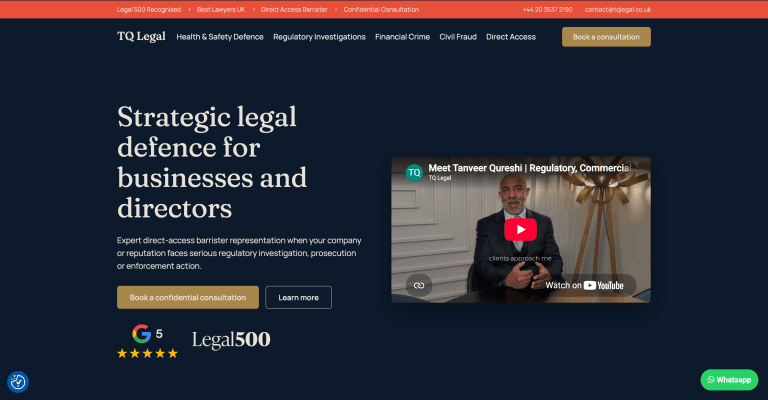
TQ Legal: Rebranding a Live Barrister’s Website Without Breaking It
A complete rebrand of a live barrister’s WordPress site, shipped as an additive component layer alongside the legacy theme so nothing already live ever broke. A token-driven design system, a fully editable ACF page builder and a measurable enquiry journey, all with a zero-downtime rollout.
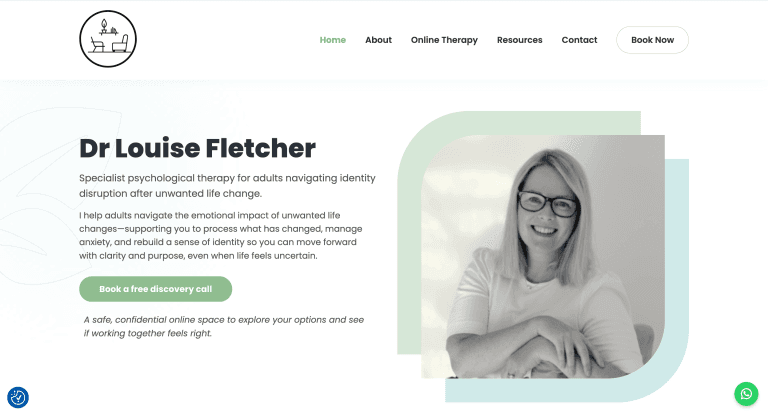
Dr Louise Fletcher
A WordPress improvement project for Dr Louise Fletcher, combining content refinement, technical SEO, analytics setup and ongoing care plan support.
Services
All servicesReading
All articles20 mistakes clients make using WordPress
Many WordPress websites underperform because of avoidable issues like poor hosting, missed updates, weak SEO structure a
Custom WordPress Development vs Page Builders: What Actually Scales in 2026
Page builders are useful for speed, but custom WordPress development usually scales better when performance, SEO, consis
Why Your Website Is Not Bringing Clients
If your website gets traffic but not enough enquiries, the problem is usually weak messaging, poor trust signals or uncl
Want Similar Results for Your Business?
Let's discuss how I can help scale your website with a custom solution tailored to your business needs. From performance optimization to complete redesigns, I deliver results that drive growth.
Free 30-minute consultation • No commitment required • For business ready